
 18:30
18:30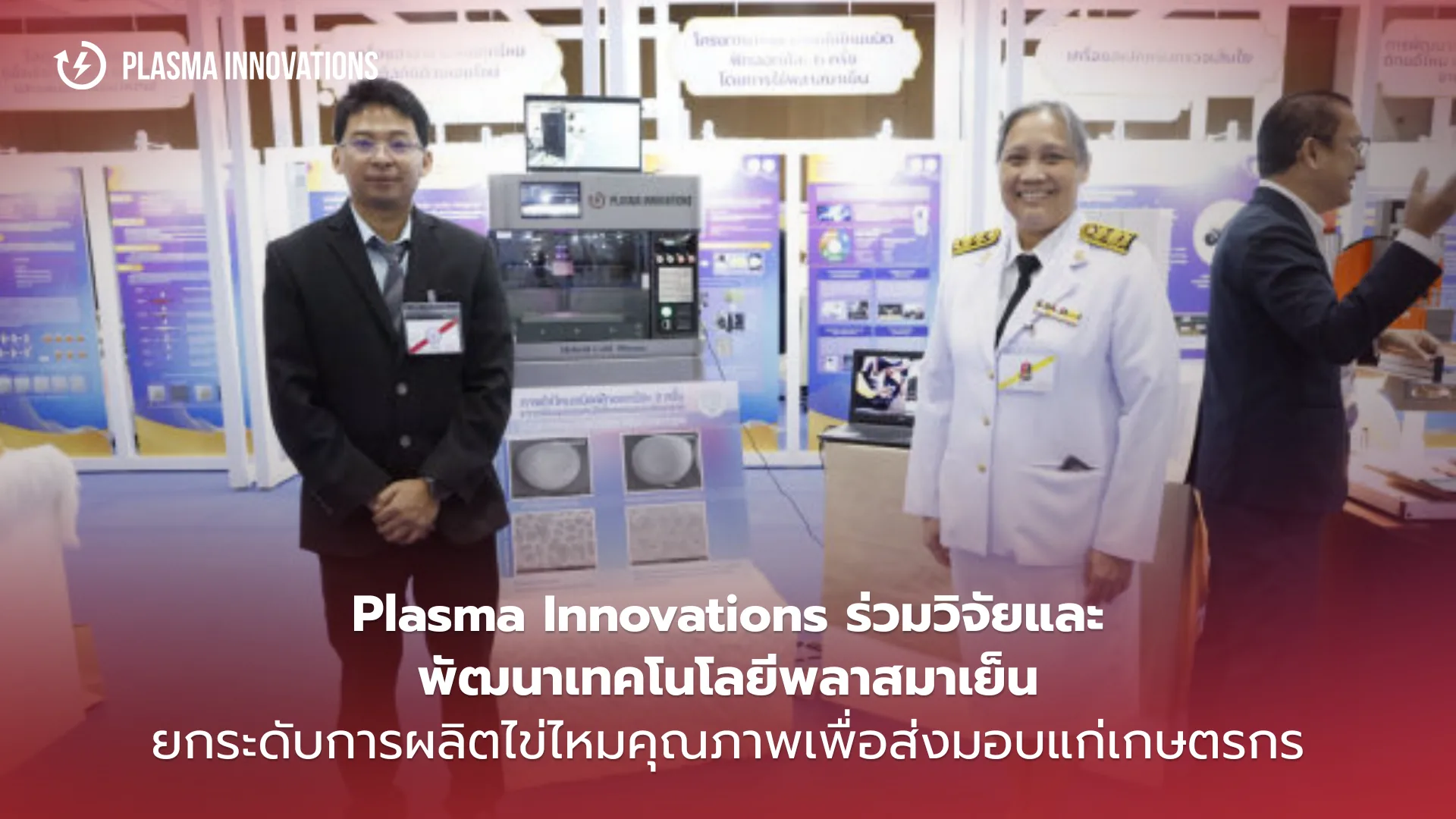
Plasma Innovations is supporting the research and development of cold plasma technology for the artificial hatching of bivoltine silkworm eggs, which hatch twice a year. The aim is to add another option for producing quality silkworm eggs for farmers, while promoting a production process that uses fewer chemicals and less water.
The project is a collaboration between the Queen Sirikit Department of Sericulture and Assoc. Prof. Dr. Siwaphon Srisonphan of the Department of Electrical Engineering, Faculty of Engineering, Kasetsart University, funded by the Science, Research and Innovation Promotion Fund through Thailand Science Research and Innovation (TSRI). Work began in fiscal year 2025 (B.E. 2568) at the Queen Sirikit Sericulture Center in Nakhon Ratchasima, the Queen Sirikit Sericulture Center in Khon Kaen, and Kasetsart University.
Developing an Alternative for Artificial Silkworm Egg Hatching
The conventional artificial hatching process uses hydrochloric acid to induce hatching and needs large volumes of clean water to rinse the acid off the eggs. It also requires controls for the risks of chemical exposure, fumes and equipment corrosion.
The research team therefore studied cold plasma as an alternative, developing a Gliding Arc plasma generator for trials with eggs of the J108 × Nang Lai Saraburi silkworm breed, in both immediate hatching (Sokushin) and hatching after cold storage (Reishin).
The study covered system design, electrical power, exposure time, distance and plasma distribution pattern to identify the best conditions for the eggs, taking into account hatching efficiency, uniformity and suitability for real-world operation.
Early Results Point to Potential for Further Development
Early trials found that the hatching rate of silkworm eggs treated with cold plasma tended to be close to that of the hydrochloric acid process. The project is now undergoing further study, and the plasma machine is being refined to suit the silkworm egg production steps at the Queen Sirikit Sericulture Centers.
The next stage of development will focus on confirming the trial results, process consistency, ease of use and the capacity to handle suitable volumes of eggs, in order to support the production of high-quality eggs from good silkworm breeds for silkworm farmers.
Research That Benefits Farmers and the Environment
If it can be developed for effective real-world use, cold plasma technology could help reduce reliance on chemicals, cut the amount of water used in the process and lower the risks to workers, while supporting a silkworm egg production process that takes resource use and environmental impact into account.
The project reflects Plasma Innovations’ commitment to applying plasma engineering expertise to solutions for real-world problems, linking research, technology and user needs to create innovations that can be developed further and deliver tangible benefits to Thailand’s agricultural sector.
 Back to News & Activities